
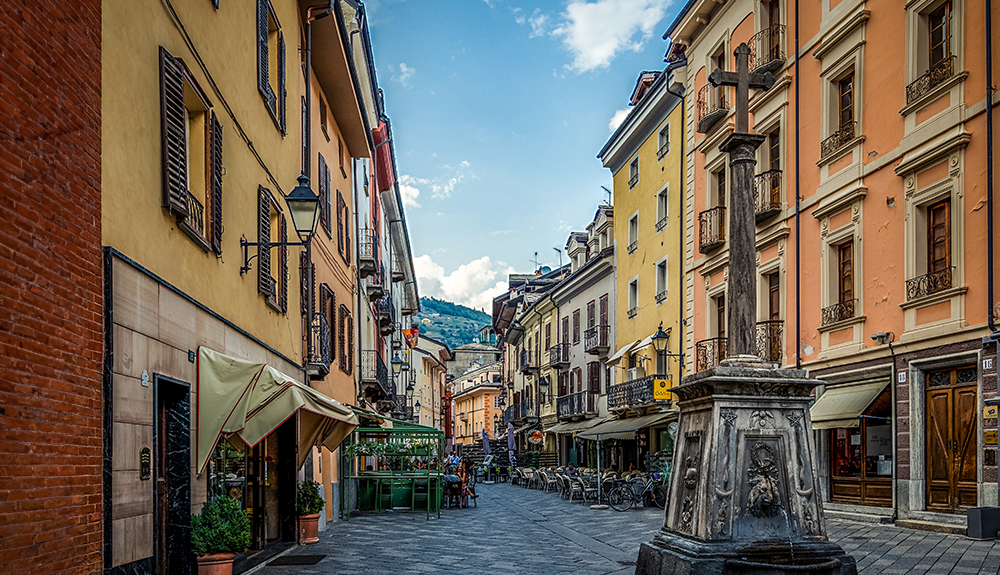
Curiosity – Learn More series is designed to share the most fascinating and lesser-known aspects of the destinations where Club Esse resorts and hotels are located. It’s a way to give guests even more reasons to explore the incredible regions of Italy. Today, we’re talking about the Sant’Orso Fair.
The Sant’Orso Fair: art and tradition in Aosta
Woodcarvers, basket weavers, and stone sculptors are all familiar with the Sant’Orso Fair, held every year in Aosta during the “giorni della merla”—January 29 (evening preview), 30, and 31.
Over these days, tens of thousands of visitors, primarily from northwestern Italy, nearby France, and Switzerland, flock to Aosta for this extraordinary festival.
The Stella di Pila initiative for the Sant’Orso Fair
On the occasion of the Sant’Orso Fair, the historic connection between Aosta, Gressan and the surrounding mountains is told from a new perspective, one that symbolically reverses a journey shaped by more than a thousand years of Valdostan craftsmanship.
For centuries, the mountain has come down to the city, bringing with it materials, skills and identity. Today, it is the high altitude that invites the city to look back up.
At the Stella di Pila, this dialogue takes shape through a project that brings together art, tradition and landscape. An initiative that pays tribute to the Fair and its protagonists, restoring the mountain’s role as a place of origin, inspiration and cultural observation.
At the heart of the project is a high-altitude installation by sculptor Peter Trojer, creator of the official symbol of the Sant’Orso Fair 2026.
The artwork brings craftsmanship and raw materials back to the peaks they come from, turning the mountain into an open exhibition space and a meeting point between tradition and contemporary artistic research.
The initiative also includes a tangible gesture of recognition for the Fair’s approximately 1,000 exhibitors, symbolically invited to lift their gaze and rediscover from above the landscape that has inspired Valdostan craftsmanship for centuries.
Alongside this, a series of initiatives open to the public further strengthens the connection between the city and the high mountains, making visible and accessible to everyone the deep bond that the Sant’Orso Fair continues to represent.
The history and meaning behind the Sant’Orso Fair
But why in Italy are the last three days of January called the “giorni della merla” (blackbird days)?
No one knows for sure, but the term is said to come from a folk legend.
According to the story, a white blackbird and her chicks took shelter in a chimney to escape the bitter cold. By February 1, they emerged covered in soot, completely black, and since then, all blackbirds are said to be black.
These days are traditionally believed to be the coldest of the year. However, this is a misconception, as temperatures generally start to rise after January 10.
What you’ll find at the fair: crafts and sculptures
During the Fair, accommodation in Aosta and the central valley is highly sought after, as visitors scramble to witness this extraordinary event, which has been held annually since 1001. It has never missed a date, not even during medieval plagues or the World Wars.
In 2026, the fair will celebrate its 1026th edition, attracting so many visitors that pedestrian traffic must follow designated one-way routes through the city streets.
Artists arrive on January 29 to set up their stalls, often sleeping beside them and warming up with plenty of vin brulé (mulled wine).
Some wooden sculptures are so large they require cranes to position them, as do the heaviest stone sculptures. The streets of Aosta’s center are filled with exhibitors displaying their creations, drawing crowds from the early morning hours.
Visitors eagerly seek out the most prestigious pieces, sometimes at high prices, especially works by internationally renowned artists like Giangiuseppe Barmasse, celebrated for his lifelike wooden sculptures.
They say he even carves the soul into his works—look him up online; he’s worth discovering!

Marco Baldisseri
Chief Commercial Officer
How to Reach the Sant’Orso Fair from Pila
Want a tip for visiting the fair?
Plan a ski week in Pila and stay at Club Esse Pila 2000. Midweek, take a break to visit the Sant’Orso Fair without using your car. A new cable car departs just 300 meters from Club Esse Pila 2000, bringing you to the heart of Aosta in just 15 minutes.
No parking hassles—just a day filled with stunning art, where you can pick up beautiful and affordable gifts for family and friends.
Combine some of the best things the Aosta Valley has to offer: nature, skiing, art, and tradition. Have a great trip and happy exploring!
Where to Stay
- Club Esse Pila 2000 – Gressan – Pila (AO)
Contact us by phone or email: